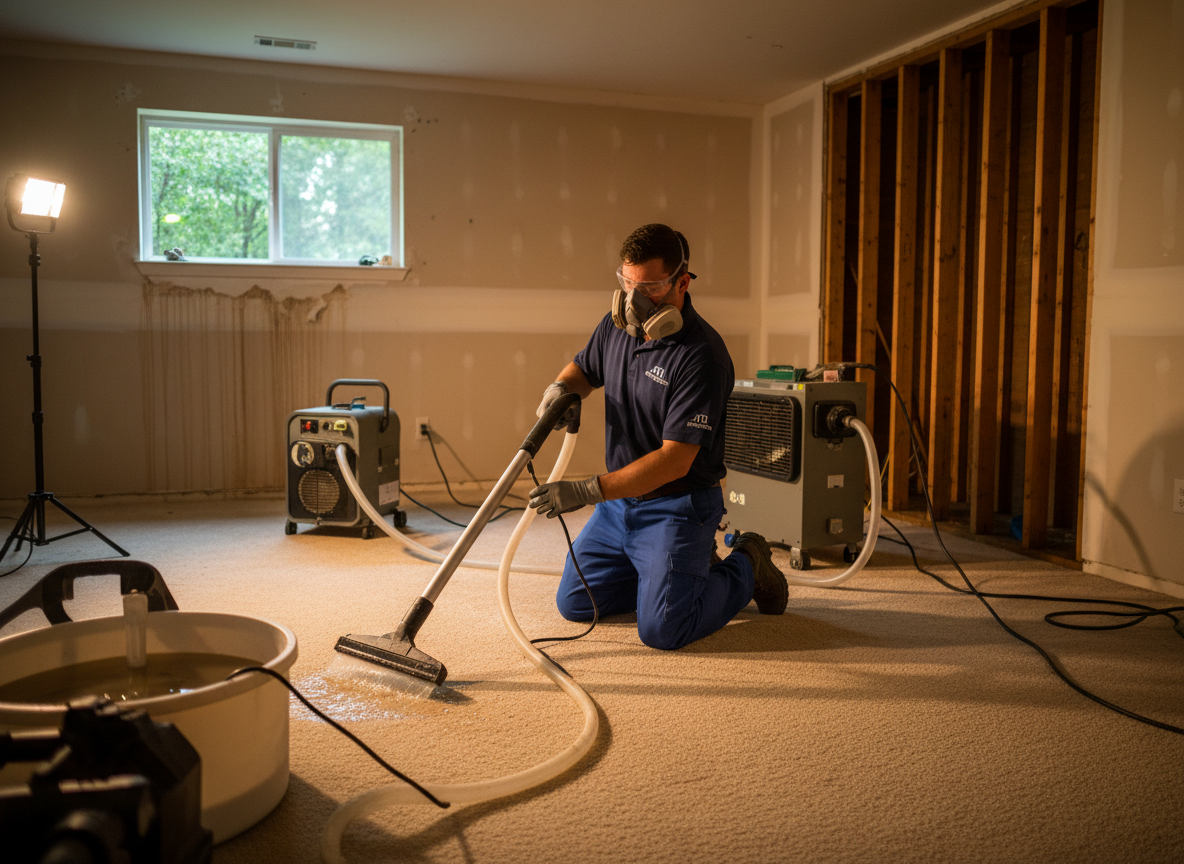
Atlanta homes built before the 1980s often sit on shallow foundations with limited perimeter drainage, so spring snowmelt from Montmorency County hills quickly saturates crawl spaces and basements. Once winter temperatures drop below zero for weeks, galvanized supply lines and older cast-iron waste lines crack where they run through unheated crawl spaces, sending water into finished lower levels. Extraction crews must account for the dense clay soils that hold moisture against footings long after surface water is gone.
After extraction, dehumidification runs longer here than in southern Michigan because the humid continental summers keep ambient moisture high even after the initial event. Insulation in attics and walls absorbs water from roof leaks caused by heavy spring rains, then holds it against rafters until hidden mold appears weeks later. Technicians check for hidden saturation behind knotty-pine paneling common in local cabins and older residences near Lewiston and Gaylord.
Sewage backups from overloaded septic systems occur after rapid snowmelt or summer downpours because many rural Atlanta properties still rely on drain fields that cannot handle sudden volume. Crews separate gray water from black water early, then use air movers sized for the tight floor plans typical of 1970s modular homes in the area. Final drying verification includes moisture readings on subfloor plywood that often delaminates when left wet through multiple freeze-thaw cycles.
Technician insight
In Atlanta the thing that catches most people out with water damage restoration is how long clay soils around older Montmorency County foundations stay saturated after snowmelt; homeowners think everything is dry once the floor looks normal but plywood subfloors and rim joists keep wicking moisture for weeks.
Burst Supply Line in 1978 Ranch
A frozen copper line split under the kitchen during a January cold snap, flooding the crawl space of a home south of Atlanta. Extraction removed several inches of standing water, then drying equipment ran for six days because the clay soil kept humidity elevated. Final readings confirmed the subfloor and rim joists were dry before new insulation was installed.
Water Damage Restoration Services We Offer
✓Basement Water Extraction
Removes standing water from Atlanta crawl spaces and basements after snowmelt or pipe failures common in Montmorency County older homes.
✓Winter Pipe Burst Drying
Targets hidden moisture behind walls and under floors following frozen supply lines that break during extended sub-zero periods.
✓Carpet and Subfloor Drying
Pulls moisture from carpet pads and plywood subfloors in homes where clay soils keep foundations damp long after surface water is gone.
✓Attic Insulation Removal
Extracts water-soaked insulation from attics after roof leaks caused by heavy spring rains or ice dams near Gaylord and Lewiston.
✓Sewage Cleanup
Handles black-water events from overloaded septic systems that back up during rapid snowmelt or summer storms in rural Atlanta properties.
Water Damage Restoration Cost in Atlanta, MI
| Service | Typical Range | What Affects It |
|---|---|---|
| Initial Assessment Visit | $125–$225 | Includes moisture readings and written scope for Atlanta homes. |
| Water Extraction | $450–$950 | Varies with depth in crawl spaces and whether sewage is present. |
| Equipment Drying Package | $600–$1,400 | Daily rate for air movers and dehumidifiers until dry. |
| Insulation And Carpet Pad Removal | $350–$700 | Disposal fees included for typical three-bedroom home. |
Ranges are typical for Atlanta, MI and confirmed with an exact written quote before any work starts.
How it works
- 1
On-Site Assessment
Technicians inspect affected rooms, measure moisture in walls and floors, and note construction details typical of Atlanta homes such as crawl-space access and older paneling.
- 2
Water Extraction
Portable pumps and wands remove standing water from basements and crawl spaces while separating gray water from any sewage present.
- 3
Drying And Dehumidification
Air movers and commercial dehumidifiers run until moisture readings reach acceptable levels, accounting for the slow-drying clay soils around Montmorency County foundations.
- 4
Final Verification
Moisture meters confirm dry conditions behind walls and under subfloors before any reconstruction begins.
Pricing
Pricing depends on water volume, affected square footage, and whether sewage or hidden wall cavities are involved.