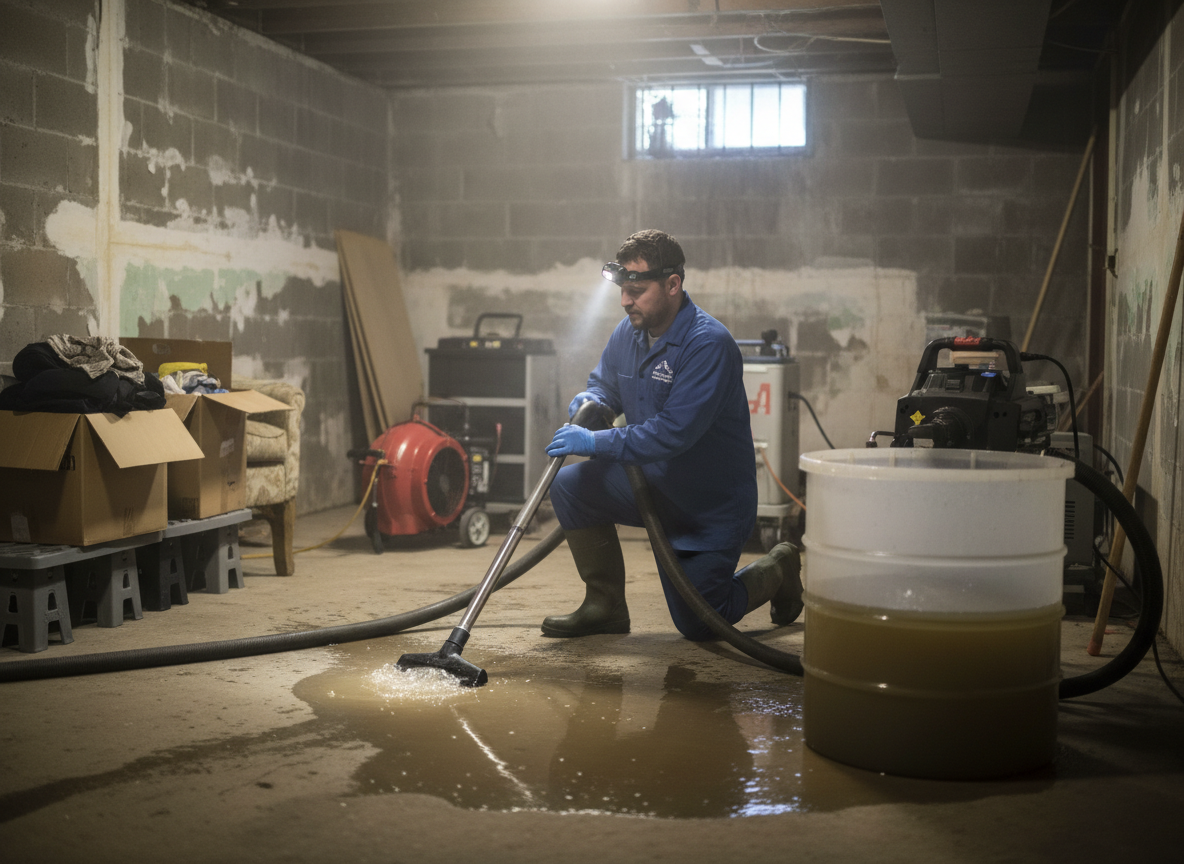
Atlanta sits in Montmorency County with a humid continental climate that brings heavy snow loads each winter. When spring thaw hits, water often finds its way into older basements through fieldstone foundations and cracked concrete common in homes built before the 1980s. We extract standing water, then use targeted drying to prevent mold in the tight crawl spaces and low-ceiling basements typical here.
Nearby Lewiston and Gaylord see the same pattern: sudden warm-ups after long cold spells overload sump systems and saturate clay-heavy soils that drain slowly. Removing water without proper airflow leaves hidden moisture behind drywall and under subfloors, especially in homes with dirt floors or partial basements. We monitor moisture levels room by room because northern Michigan humidity in summer can re-wet surfaces days later.
Terrain around Atlanta includes rolling hills and wooded lots where runoff funnels toward foundations during warm summer storms. Older plumbing and shallow wells add another risk when lines freeze and burst. We focus on pulling water before it reaches finished areas and drying joists and sill plates to avoid structural softening that shows up years later.
Every job starts with checking for hidden pockets along the north-facing walls where snow piles deepest. We avoid shortcuts that leave damp insulation in place, since the cold winters here make any remaining moisture expand and contract, widening cracks over time.
Technician insight
In Atlanta the thing that catches most people out with Basement Water Removal is how quickly snowmelt from the north side of the house soaks into fieldstone foundations once temperatures climb above freezing. Older homes near Lewiston often have dirt floors or shallow sumps that fill fast, and homeowners try to handle it with a shop vac until the water reaches the furnace. We always check the grade around the house first because the clay soil here holds water against the walls for days.
Spring Thaw In Atlanta Basement
Heavy snowmelt overwhelmed a sump in a 1970s home on the north edge of Atlanta. Water reached six inches across the concrete floor and crept under the laundry area. We extracted the water, set drying equipment along the fieldstone wall, and returned daily until moisture levels dropped. The homeowner avoided mold growth that often appears after quick thaws.
Basement Water Removal Services We Offer
✓Sump Pump Failure Extraction
Removes water after sump pump breakdowns during spring thaw or power outages common in Montmorency County.
✓Snowmelt Flooding Cleanup
Extracts and dries basements flooded by rapid snowmelt runoff from wooded lots around Atlanta and Lewiston.
✓Crawl Space Water Removal
Drains and dries crawl spaces under older Atlanta homes where dirt floors and poor ventilation trap moisture.
✓Burst Pipe Basement Drying
Handles water from frozen pipes that thaw in spring, focusing on sill plates and joists in pre-1980 homes.
✓Storm Runoff Basement Extraction
Clears water from heavy summer rains that pool against foundations on sloped lots near Gaylord.
Basement Water Removal Cost in Atlanta, MI
| Service | Typical Range | What Affects It |
|---|---|---|
| Basic Extraction | $600–$1,200 | Shallow water under 2 inches, small area |
| Full Basement Drying | $1,400–$2,800 | Includes equipment for multiple rooms after snowmelt |
| Crawl Space Extraction | $800–$1,600 | Dirt floor homes, extra time for access |
| Additional Daily Equipment | $150–$300 per day | Extra dehumidifiers when humidity stays high |
Ranges are typical for Atlanta, MI and confirmed with an exact written quote before any work starts.
How it works
- 1
Site Assessment
We inspect the basement, check foundation type, and locate water sources tied to local thaw or storm patterns.
- 2
Water Extraction
Pumps and vacuums remove standing water while protecting older fieldstone or concrete walls typical in Atlanta.
- 3
Drying And Dehumidification
Air movers and dehumidifiers target joists, subfloors, and insulation to counter humid summer air after removal.
- 4
Moisture Monitoring
Daily checks continue until readings stabilize, preventing hidden damp spots that refreeze in winter.
Pricing
Pricing varies by water volume, access, and drying time needed in older Montmorency County homes.