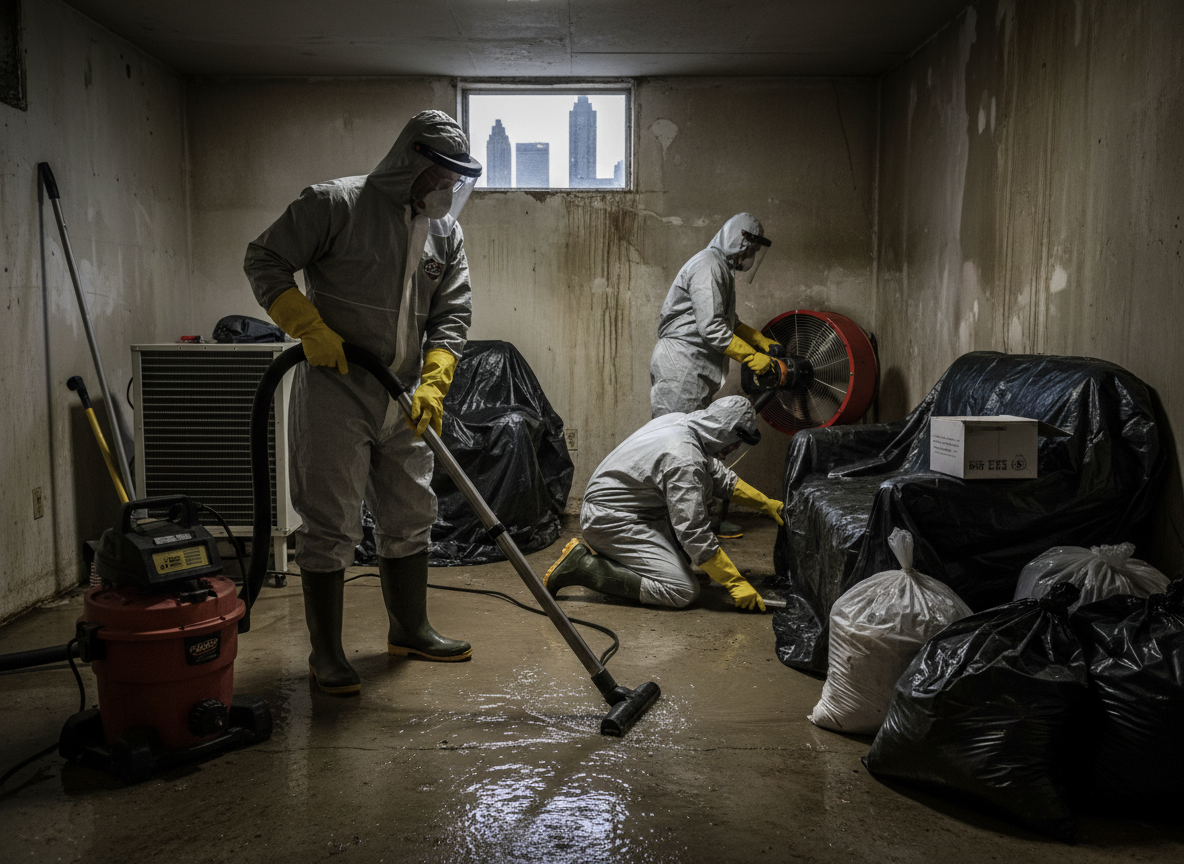
Atlanta sits in Montmorency County with many older homes on septic systems that struggle during spring snowmelt or heavy summer rains. Sewage backups often involve black water carrying bacteria and waste that soaks into subfloors, drywall, and insulation common in 1970s and 1980s builds around here. Extraction must happen fast because the humid continental climate keeps moisture trapped longer in cooler months, raising the risk of hidden mold growth behind cabinets or under laminate flooring.
Terrain around Atlanta and nearby Lewiston features sandy soils that drain unevenly, so sewage can spread farther under crawl spaces or along foundation walls than homeowners expect. Crews use air movers and dehumidifiers rated for cold-weather operation to pull moisture from these tight spaces without freezing lines. Odor removal requires sealing off affected rooms and applying targeted enzymes rather than simple fans, because porous materials like particleboard in older kitchens hold smells for months if not fully removed.
Gaylord properties just south often share the same well and septic setups, so cross-contamination between neighboring homes becomes a real concern during widespread flooding. Technicians test moisture levels at multiple depths in flooring and walls before declaring an area clean, and they document every step for insurance adjusters who know the seasonal patterns in this county.
Technician insight
In Atlanta, the thing that catches most people out with Sewage Cleanup is how fast spring snowmelt pushes septic waste into older crawl spaces around here, especially homes built before modern drain fields became standard in Montmorency County.
Spring Thaw Backup in Atlanta Home
Heavy snowmelt overwhelmed an older septic line on a property near downtown Atlanta. Sewage reached the finished basement and soaked carpet and lower drywall. Extraction and removal of contaminated materials took two days, followed by targeted drying and sanitizing. The home was cleared for rebuild within a week once moisture readings stabilized.
Sewage Cleanup Services We Offer
✓Black Water Extraction
Removes contaminated sewage water from basements and crawl spaces using truck-mounted pumps suited for Montmorency County properties.
✓Contaminated Flooring Removal
Cuts out and disposes of soaked carpet, pad, and laminate that trap bacteria after backups in Atlanta homes.
✓Sewage Odor Removal
Applies enzyme treatments and air scrubbing to eliminate persistent smells in older homes around Lewiston and Atlanta.
✓Basement Sewage Cleanup
Handles full basement decontamination including wall cavities after septic or drain failures common in spring thaw.
✓Drain Backup Response
Clears and sanitizes areas affected by main line backups that push waste into living spaces during heavy rains.
Sewage Cleanup Cost in Atlanta, MI
| Service | Typical Range | What Affects It |
|---|---|---|
| Small Area Extraction | $800–$1,600 | Single room or limited basement corner; higher in winter when equipment must run longer |
| Full Basement Sewage Cleanup | $2,200–$4,500 | Includes wall cavities; increases with sandy soil allowing wider spread near Lewiston |
| Odor Removal Add-On | $350–$750 | Required when porous materials in 1970s homes hold smells after initial cleaning |
Ranges are typical for Atlanta, MI and confirmed with an exact written quote before any work starts.
How it works
- 1
Site Assessment
Inspect affected zones, test moisture in walls and floors, and identify how far sewage traveled through local soil conditions.
- 2
Water Extraction
Remove standing black water with specialized equipment while containing runoff on sandy Montmorency County lots.
- 3
Cleaning And Sanitizing
Apply EPA-registered disinfectants to all surfaces and remove porous materials that cannot be restored.
- 4
Drying And Odor Control
Run dehumidifiers and air movers, then treat remaining odors before final clearance testing.
Pricing
Pricing depends on the volume of sewage, number of affected rooms, and whether crawl spaces or older septic systems are involved.