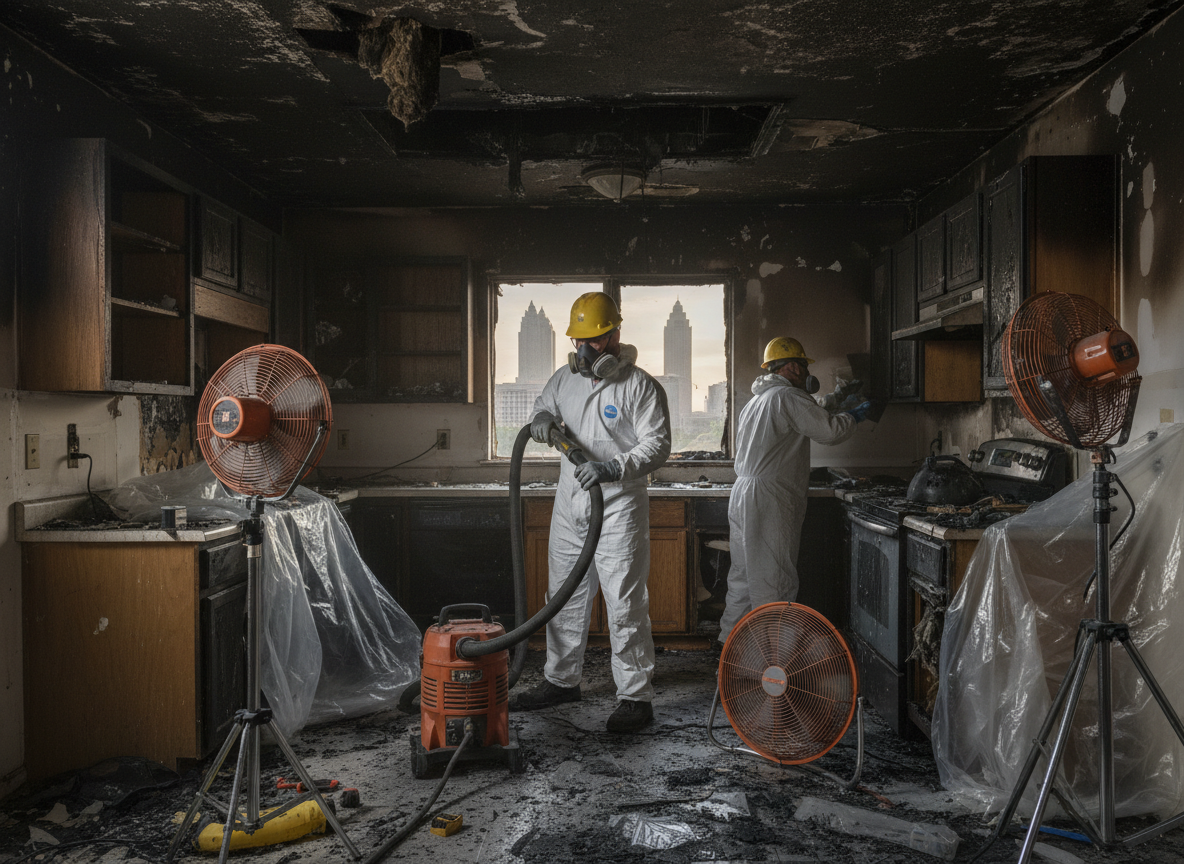
Atlanta homes built before 1980 often feature balloon framing and plaster over lath that lets smoke travel vertically through wall cavities during a fire. Once winter temperatures drop below freezing, any water used by firefighters can freeze inside those cavities and expand, cracking plaster and pushing soot deeper into insulation. Crews must open walls from both sides and use negative air machines before temperatures swing back above freezing to prevent hidden mold growth once spring arrives.
Montmorency County terrain includes sandy soils and shallow water tables near the Thunder Bay River watershed. After a fire, alkaline soot can leach into that soil when snow melts, creating pH spikes that damage concrete foundations and well casings. Restoration teams test soil pH at the drip line and install temporary French drains before heavy spring runoff to keep runoff from reaching neighboring wells in Lewiston and Gaylord.
Michigan residential code requires replacement of any structural member that shows more than 10 percent char depth. In Atlanta’s older stock, many roof trusses are 2x4 construction from the 1960s; even light smoke can reduce their load rating. Technicians document char depth with a probe before any demolition so insurance adjusters see the exact members that must be sistered or replaced rather than simply cleaned.
Technician insight
In Atlanta the thing that catches most people out with fire damage restoration is how the cold snowy winters drive smoke and water into balloon-framed walls of 1960s homes, then freeze there overnight. By the time owners notice, the plaster has already cracked and soot has migrated into the attic insulation that never gets checked until spring melt reaches the crawlspace.
Kitchen Fire With Frozen Suppression Water
A woodstove spark ignited cabinets in an Atlanta home during a January cold snap. Firefighters used water that froze inside exterior walls overnight. We opened cavities from both sides, removed saturated insulation, dried the framing with supplemental heat and replaced two charred studs before spring thaw could push moisture into the floor joists.
Fire Damage Restoration Services We Offer
✓Soot and Ash Removal
HEPA vacuuming and chemical sponging of all surfaces to capture fine alkaline particles before they etch glass or HVAC coils in Atlanta homes.
✓Smoke Odor Neutralization
Ozone and hydroxyl treatments combined with thermal fogging to reach smoke trapped in attic insulation common in Montmorency County older homes.
✓Structural Drying After Fire Suppression
Rapid drying of water introduced by firefighters before it freezes in wall cavities during Atlanta’s sub-zero winter nights.
✓Content Cleaning and Pack-Out
Inventory, cleaning and off-site storage of salvageable belongings while on-site reconstruction occurs in Lewiston or Gaylord properties.
✓Charred Wood Assessment
Probe testing and documentation of load-bearing members to meet Michigan code before any replacement in pre-1980 Atlanta housing.
Fire Damage Restoration Cost in Atlanta, MI
| Service | Typical Range | What Affects It |
|---|---|---|
| Initial Assessment And Documentation | $250–$450 | Larger Atlanta homes or multi-story properties increase time on site. |
| Soot Removal Per Room | $300–$600 | Price rises with heavy smoke residue in older plaster walls. |
| Odor Neutralization Treatment | $400–$800 | Whole-house ozone or multiple visits needed for attic insulation. |
| Structural Member Replacement | $1,200–$3,500 | Varies by number of trusses or joists requiring sistering after char testing. |
Ranges are typical for Atlanta, MI and confirmed with an exact written quote before any work starts.
How it works
- 1
Site Safety And Containment
Secure the structure, set up negative air and tarps to keep snow from entering fire-damaged openings during winter response.
- 2
Detailed Inspection
Document char depth, smoke migration paths and any frozen water pockets inside walls using moisture meters and borescopes.
- 3
Removal And Cleaning
Remove unsalvageable materials, then clean remaining surfaces and neutralize odors before reconstruction begins.
- 4
Drying And Monitoring
Install drying equipment and monitor daily until moisture levels return to pre-loss readings, accounting for overnight freezes.
- 5
Rebuild And Final Clearance
Replace structural members to code, reinstall finishes and perform post-clean air sampling before homeowner re-entry.
Pricing
Costs depend on square footage affected, depth of smoke penetration and whether winter conditions require extra freeze protection.